Introduction
Group theory is the study of algebraic structures known as groups. Groups are fundamental in abstract algebra and are used in many areas of mathematics, including number theory, geometry, analysis, and mathematical physics. They are also used in various other fields, such as physics, chemistry, computer science, and cryptography.
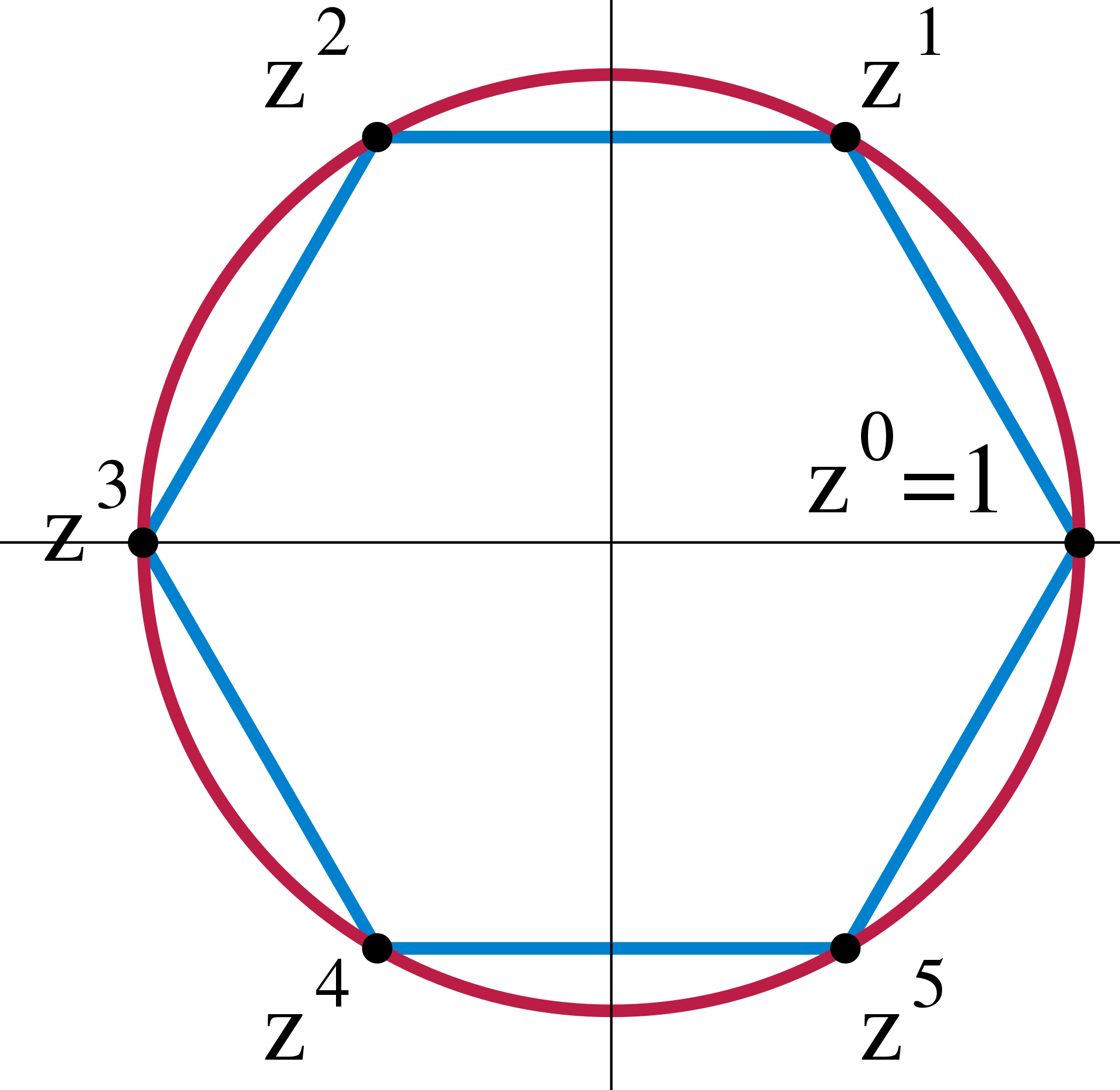
Contents
Groups, Order and Subgroups
Cyclic Groups
Cosets and Lagrange’s Theorem
Homomorphisms, Normal Subgroup & Conjugation
Quotients
Isomorphism Theorems
Abelianisation of Groups
Group Actions
Sylow’s Theorems
Free Groups and Relations
Group Cohomology
Some Concrete Groups
| Order | Groups up to isomorphism |
|---|---|
| 1 | Trivial group |
| 2 | |
| 3 | |
| 4 | |
| 5 | |
| 6 | |
| 7 | |
| 8 | |
| 9 | |
| 10 | |
| 11 | |
| 12 |
For a more detailed classification of groups of small order, see Groups of Small Order.
Klein Four Group
Permutations and Symmetric Groups
Dihedral Groups
Linear Groups
Quaternion Group
Braids and Braid Groups