Introduction
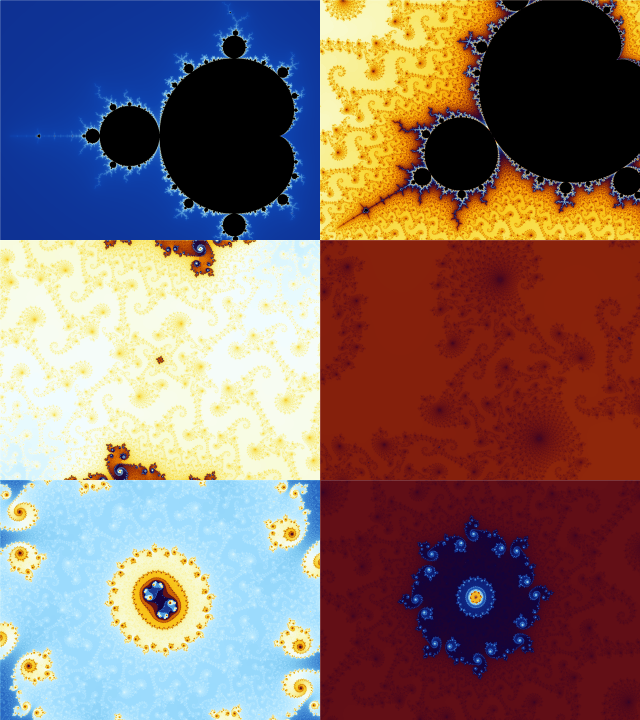
Fractal geometry is a branch of mathematics that studies complex structures exhibiting self-similarity across different scales. Unlike traditional Euclidean geometry, which describes simple shapes like lines, circles, and polygons, fractal geometry deals with objects that have intricate detail at every level of magnification.
A key characteristic of fractals is self-similarity, meaning they look similar regardless of the level of zoom. This can be exact self-similarity (where smaller copies are identical to the whole) or statistical self-similarity (where the structure follows a probabilistic rule).